
The Quiet Work of Becoming: Why Slow Healing Is the Deepest Healing
Dec 12, 2025Healing doesn’t happen in grand gestures — it happens in the quiet moments you choose to stay present.
Learning to Slow Down
In the early years of my healing journey, I believed progress meant pushing through.
Pushing through pain. Pushing through discomfort. Pushing through exhaustion.
If I could just work hard enough — heal fast enough — maybe I could finally escape the heaviness I carried inside.
But instead of peace, I found burnout. My body was constantly tense. My emotions swung between numbness and overwhelm. My nervous system didn’t need more intensity — it needed permission to slow down.
It wasn’t until I started to honor stillness — to sit quietly on my mat and breathe instead of striving — that healing truly began.
That’s when I discovered the truth: healing is not about speed. It’s about safety.
The Four Principles of Trauma-Sensitive Yoga
True healing requires gentleness. When we practice trauma-sensitive yoga, we’re not trying to “perform” or “perfect” a pose — we’re retraining the nervous system to trust again.
These four principles have guided my journey and now form the foundation of how I teach:
1. Choice — Reclaiming Your Agency
After trauma, the body often feels like a place of powerlessness. Trauma-sensitive yoga invites choice back into the practice.
You get to decide:
-
When to move
-
How deep to go
-
When to rest
Each choice builds safety and self-trust — one breath at a time.
2. Presence — Anchoring in the Now
Trauma pulls us into the past or pushes us into the future. Presence grounds us here.
In yoga, presence means noticing the breath, the heartbeat, the contact of your body against the floor.
This awareness re-teaches the body: you are safe now.
3. Effective Action — Responding, Not Reacting
In trauma, our responses often become reactive — fight, flight, freeze, or fawn.
Yoga helps us practice effective action instead.
We notice the sensations rising within us and choose how to respond.
Each time we respond with awareness, we strengthen emotional regulation and self-mastery.
4. Rhythm — The Medicine of Repetition
Trauma disrupts our internal rhythm. The nervous system forgets how to regulate naturally.
Consistent, gentle repetition — like breath, movement, or ritual — restores that rhythm.
Rhythm creates safety. It tells the body, you can relax now.
Ashtanga Yoga: Structure as Safety
This is why I fell in love with Ashtanga Yoga.
At first, the discipline intimidated me — the same sequence, every day, over and over.
But soon I realized the repetition wasn’t rigidity; it was rhythm.
Each morning, I didn’t have to decide what to do — I simply showed up.
My breath met my body, my body met the practice, and my nervous system learned that safety could live in structure.
The consistency of Ashtanga — its memorized postures, steady breath, and mindful gaze — offers a container strong enough to hold our healing.
Within that structure, we can finally soften.
Abhyāsa and Vairāgya — The Art of Healing Over Time
In Yoga Sutra I.12, Patanjali writes:
abhyāsa-vairāgyābhyāṁ tan-nirodhaḥ
“Through practice and non-attachment, the fluctuations are restrained.”
This teaching reveals the essence of slow healing.
Healing isn’t about perfection; it’s about consistency (abhyāsa) and surrender (vairāgya).
We show up, we practice, and we release the expectation of immediate results.
Over time, we begin to notice the subtle changes: fewer emotional spikes, deeper breaths, a softer heart.
Healing becomes less about fixing ourselves and more about moving into who we truly are — steady, whole, and worthy of peace.
Your Invitation to Rise
If you’re ready to embrace the quiet work of becoming — to slow down, reconnect with your body, and find peace in daily ritual — I invite you to begin your rising today.
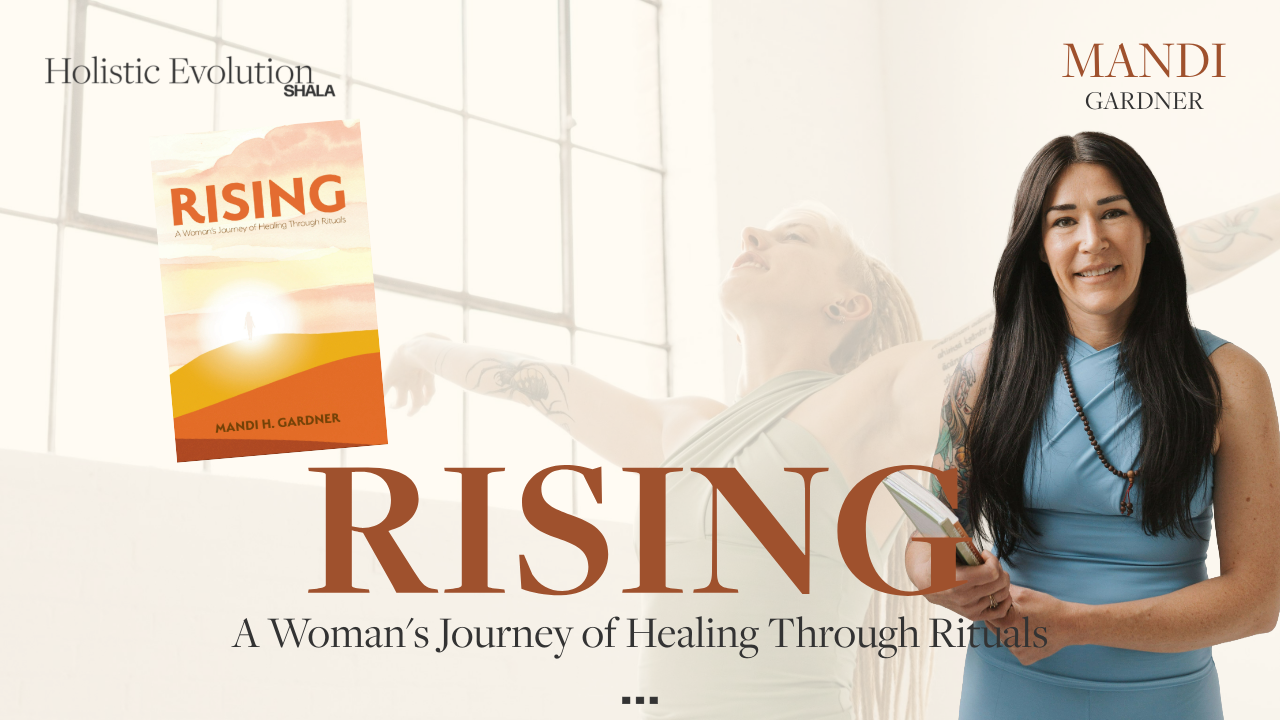
--> Pre-order RISING: A Woman’s Journey of Healing Through Rituals and receive your free gift:
🕯️ The Rising Rituals 7-Day Journal — a guided companion to help you integrate grounding rituals into your daily life.
📩 Simply save your receipt and email it to [email protected] to claim your bonus.
Healing doesn’t ask for perfection.
It asks for presence.
And every time you choose to pause, breathe, and stay — even for a moment —
you’re already becoming. 🌸
With warmth and devotion,
Mandi
Founder of Holistic Evolution Shala
Author of RISING: A Woman’s Journey of Healing Through Rituals
Yoga's 8 Limbs to Heal Trauma and Find Lasting Peace
In this step-by-step guide, you’ll learn how the eight limbs of yoga can help you heal from the effects of childhood trauma.
Take the First Step Toward Lasting Peace Today!
Your healing journey starts here.
Join a Community of Healing and Growth!
Are you a woman healing from childhood trauma or CPTSD?
Subscribe to Our Weekly Newsletter
Every week, receive:
- Educational Insights: Practical tips on using yoga and DBT skills for trauma healing.
- Inspiration: Stories of resilience and transformation to keep you motivated.
- Healing Practices: Techniques for creating calm, connection, and confidence in your daily life.
Sign Up Now and Take a Step Toward Lasting Peace!
We hate SPAM. We will never sell your information, for any reason.