History of Yoga
A Plain-Language History of Yoga: Texts, Teachers, and Lineages
Key takeaways
Yoga is more than 2,000 years old and has meant many things.
The Yoga Sutras describe eight limbs. Posture is only one of them.
Most studio yoga today is modern postural yoga, shaped in 20th-century India.
Ashtanga grew from Krishnamacharya's teaching in Mysore.
Yoga is much older than the classes most people know. This guide explains where it came from, what the old texts say, and how the teachers of the last century shaped Ashtanga. Dates for early texts are scholarly estimates, and scholars often disagree. Where they do, I say so.
What are the key dates in yoga history?
About 1500-500 BCE: the Vedas are composed and passed on orally
From about 800 BCE: the earliest Upanishads
About 200 BCE-400 CE: the Yoga Sutras of Patanjali
11th-15th century: the first hatha yoga texts, ending with the Hatha Yoga Pradipika
Late 17th-18th century: the Gheranda Samhita and Hathabhyasapaddhati
1933: Krishnamacharya opens the Mysore Palace Yogashala
1937-1966: Pattabhi Jois begins teaching; Iyengar publishes Light on Yoga
2009 and 2024: Pattabhi Jois and Sharath Jois die
What yoga is
The Sanskrit word yoga is usually linked to yoking, or union. Across history it has meant ethical discipline, meditation, philosophy, breath work, and physical practice. Three layers are worth keeping apart:
Philosophy and ethics: the Yoga Sutras, on how the mind works and how to steady it.
Meditation and breath: found in the Upanishads and the Bhagavad Gita, and later in the hatha texts.
Physical practice: hatha yoga, and later the posture-centered yoga of the twentieth century.
Most of what is taught in studios today is modern postural yoga. It draws on the older layers, but it is not the same thing.
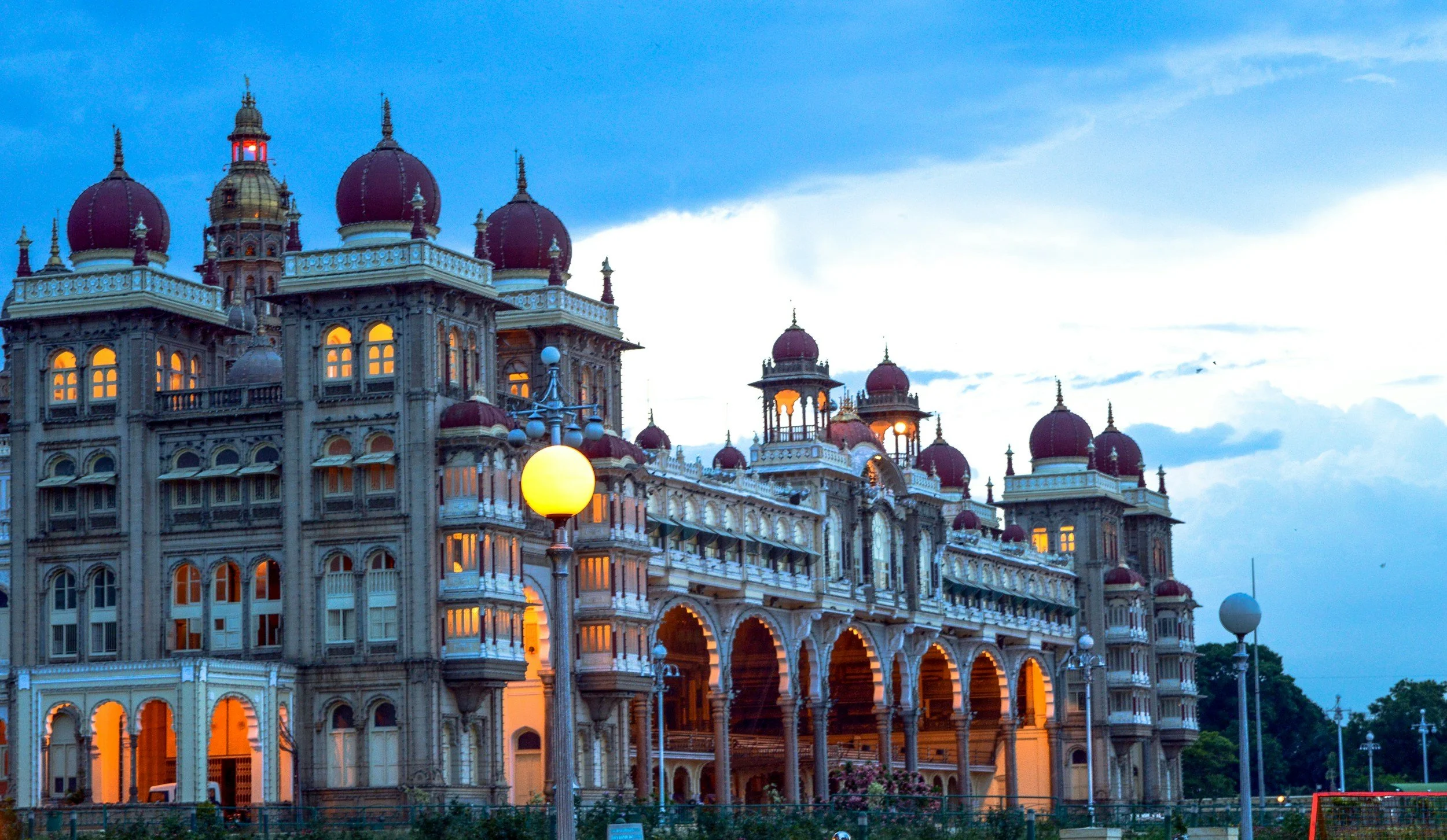
Mysore Palace, Mysore, India
Explore the guide
The eight limbs of yoga: the path in Patanjali's Yoga Sutras
Ayurveda and yoga: the sister science of medicine
Ancient yoga texts: from the Vedas to the Yoga Sutras
Hatha yoga texts: the sources of the physical practice
History of Ashtanga yoga: from Mysore to the world
Yoga teachers and lineages: Krishnamacharya, Jois, Iyengar, Ghosh
Where are the chakras? The subtle body, explained
Learn Ashtanga from the start. Join the Foundations waitlist and be the first to know about the shala opening in Herriman, Utah.
“Inhale, and God approaches you. Hold the inhalation, and God remains with you. Exhale, and you approach God. Hold the exhalation and surrender to God.”
T. Krishnamacharya